PRP and Hyaluronic Acid. Are they better together?

Knee osteoarthritis is chronic condition affecting the knees. Sometimes known as wear and tear it can have massive implications for patients with day-to-day activities. Usually a condition of the od, it is becoming more frequent in the young with sporting injuries, arthroscopic surgery and obesity making it more prevalent in this age group.

We have used Platelet Rich Plasma (PRP) for over 16 years in our clinic and Hyaluronic Acid (HA) for 23 years to treat Knee Osteoarthritis safely. Combining the two can be useful. To recap:

PRP is the process of taking one’s own blood (30-60ml) and separating the platelet layer from the red cells. This is then injected into the knee joint under ultrasound in safe and sterile manner. There are over 16 high level studies that show PRP reduces pain and improves activity in sport with patients that have knee osteoarthritis.

Hyaluronic Acid is a natural substance produced in joints and useful for lubricating and helping cartilage absorb stress and load. Knees with osteoarthritis tend to have less HA. Injecting HA into knees is safe and beneficial in reducing pain.
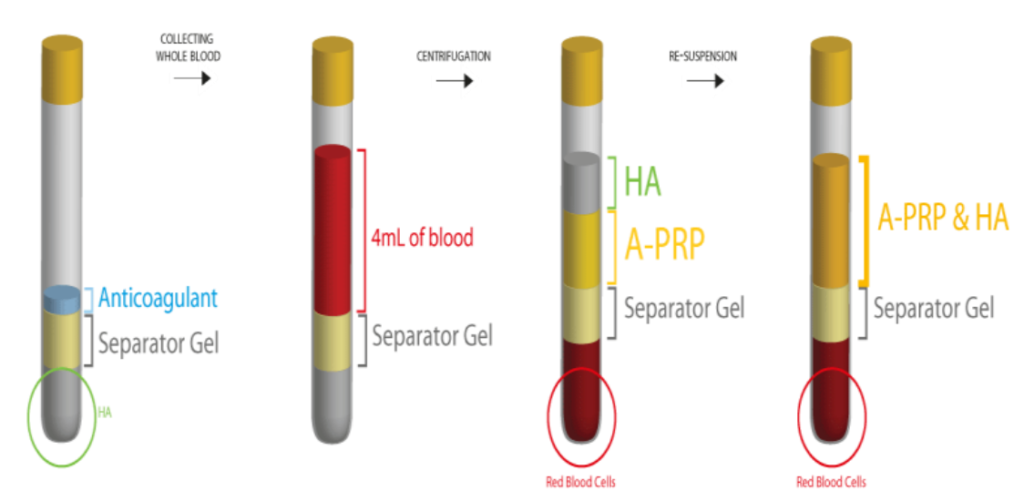
Combining PRP and HA appears to be a far superior way to treat some types of knee osteoarthritis. A few studies have shown the combined treatment is better than HA treatment alone over 12 months. Whilst the authors have not divided knee osteoarthritis into the different subgroups, we feel the combination should be reserved with those patients that have patellofemoral joint OA and Lateral compartment OA. We use a commercial product that has HA and PRP in one tube or this can be performed separately depending on the size of the joint.

Dr Ibrahim performs PRP and HA combined injections. These are office-based injections performed under ultrasound for maximum effect and accuracy.

Share the Post:

Relevant Articles

“Runner’s Trots”: The Real Medical Reason Endurance Athletes Sometimes Lose Bowel Control

What really happens when an elite athlete suddenly loses bowel control mid-race? The recent HYROX incident involving Australian athlete Joanna Wietrzyk put “runner’s trots” firmly in the spotlight — but exercise-induced diarrhoea, urgency and even faecal incontinence can happen to athletes at every level. During hard endurance exercise, blood is diverted away from the gut, repetitive impact can stimulate bowel activity, and heat, dehydration and pre-race nutrition can push the digestive system beyond its comfort zone. The result can be a sudden and sometimes very urgent need to go — with surprisingly little warning. So why does it happen, and can you prevent it? Here’s the real physiology behind one of endurance sport’s most awkward problems.

PRP for Knee Osteoarthritis: How Many Injections Do You Need, and How Long Does Relief Last?

If you're considering PRP for knee osteoarthritis, two of the biggest questions are how many injections are needed and how long the results may last. Recent research provides useful insight into both, with many clinical trials using a short course of 2–3 injections rather than a single treatment. Our latest evidence update looks at the durability of PRP, how platelet concentration may influence the length of benefit, and when a repeat course may be considered for patients who respond well.

Rotator Cuff Tendinopathy and PRP: Modest but Durable Benefit

Rotator cuff tendinopathy and partial-thickness tears are common causes of persistent shoulder pain, particularly when symptoms don't settle with rehabilitation alone. Research into PRP is growing, with recent trials suggesting its benefits may be modest but more durable over time compared with corticosteroid injections. Our latest evidence update explores the shoulder-specific research, including partial-thickness tears, injection technique and why precise targeting and a structured strengthening program remain important when considering PRP.