Synvisc-One

Hyaluronic Acid Injection for Knee Osteoarthritis

Synvisc-One is a single-injection treatment for knee osteoarthritis. It is a clear gel made from a natural substance that lubricates the joint, temporarily replacing deteriorated synovial fluid. It may provide up to 6 months of pain relief per injection and can improve mobility.

Synvisc-One Injection

What is Synvisc-One?

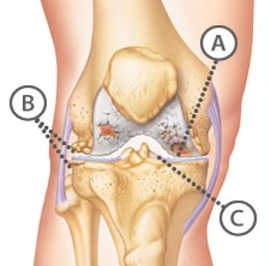
In knees with osteoarthritis, the joint fluid (called synovial fluid) can break down and not provide the cushioning your knee needs.
A. Cartilage wears away B. Bone spurs may develop C. Joint fluid breaks down
Synvisc-One supplements your knee joint fluid to relieve the pain and improve the knee joint's natural shock absorbing abilities.
D. Synvisc-One replaces joint fluid

Frequently Asked Questions

Who is it for?

Patients with knee osteoarthritis who have tried diet, exercise, and over-the-counter pain relief but still experience symptoms.

  • Given as a single, in-clinic injection.
  • Dr Ibrahim’s protocol: injections every 6 months for 2 years, then yearly.
  • Relief can start within a month; full benefits usually 8-12 weeks after the treatment course.
  • Efficacy can last up to 12 months.
  • Rest for at least 24 hours post-injection.
  • Avoid strenuous activity for 48 hours.
  • Some patients may experience temporary knee pain or swelling (synovitic reaction).
  • Usually mild; about 3.4% of patients report local adverse effects.
  • Patients with allergies to bird products may not be suitable.
  • $480-$550 per injection (GST inclusive).
  • Chevalier et al., Ann Rheum Dis., 2010
  • Waddell & Bricker, J Surg Orthop Adv., 2006

Articles

“Runner’s Trots”: The Real Medical Reason Endurance Athletes Sometimes Lose Bowel Control

What really happens when an elite athlete suddenly loses bowel control mid-race? The recent HYROX incident involving Australian athlete Joanna Wietrzyk put “runner’s trots” firmly in the spotlight — but exercise-induced diarrhoea, urgency and even faecal incontinence can happen to athletes at every level. During hard endurance exercise, blood is diverted away from the gut, repetitive impact can stimulate bowel activity, and heat, dehydration and pre-race nutrition can push the digestive system beyond its comfort zone. The result can be a sudden and sometimes very urgent need to go — with surprisingly little warning. So why does it happen, and can you prevent it? Here’s the real physiology behind one of endurance sport’s most awkward problems.

PRP for Knee Osteoarthritis: How Many Injections Do You Need, and How Long Does Relief Last?

If you're considering PRP for knee osteoarthritis, two of the biggest questions are how many injections are needed and how long the results may last. Recent research provides useful insight into both, with many clinical trials using a short course of 2–3 injections rather than a single treatment. Our latest evidence update looks at the durability of PRP, how platelet concentration may influence the length of benefit, and when a repeat course may be considered for patients who respond well.

Rotator Cuff Tendinopathy and PRP: Modest but Durable Benefit

Rotator cuff tendinopathy and partial-thickness tears are common causes of persistent shoulder pain, particularly when symptoms don't settle with rehabilitation alone. Research into PRP is growing, with recent trials suggesting its benefits may be modest but more durable over time compared with corticosteroid injections. Our latest evidence update explores the shoulder-specific research, including partial-thickness tears, injection technique and why precise targeting and a structured strengthening program remain important when considering PRP.