
Arthrosamid® Injections for Knee Osteoarthritis
An innovative hydrogel injection designed to relieve pain, reduce stiffness, and improve knee function in patients with knee osteoarthritis (OA). Unlike other treatments, Arthrosamid integrates with the knee’s joint lining (synovium) to provide long-term cushioning and protection.
Arthrosamid® offers a long-lasting, non-surgical solution for knee osteoarthritis, helping patients regain mobility and improve quality of life.
Currently Arthrosamid® is only available in Australia via application to Canberra (TGA). Dr Ibrahim and his team can help arrange this.
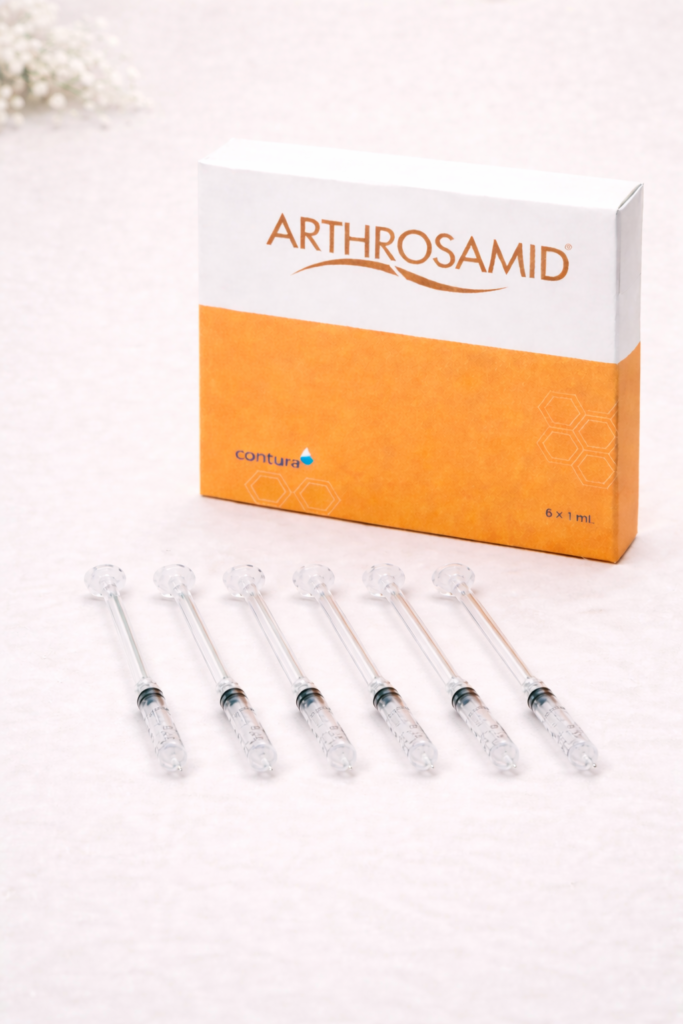
How is Arthrosamid® Administered?
Before treatment with Arthrosamid®, you will have a local anaesthetic to numb the area around your knee. You should also be given antibiotics ahead of this to protect you from any potential risk of infection.
Your knee is cleaned prior to treatment. Arthrosamid® is then singularly injected into your knee’s synovial cavity. This is sometimes performed with the help of ultrasound. The needle is then removed and a bandaid is placed over the injection site.
Arthrosamid® distributes within the synovial fluid and begins to stick to and mesh with the synovial tissue.
Frequently Asked Questions
How it works
- Arthrosamid is a non-biodegradable hydrogel made mostly of water and a cross-linked polyacrylamide backbone.
- Once injected, it meshes with the synovial tissue, thickening the joint lining and gradually reducing pain.
- Pain relief usually begins within 6–8 weeks and can last for several years.
Who is it for?
- Adults with knee OA who have not found relief from other treatments like pain medication, physiotherapy, PRP, or hyaluronic acid.
- Not suitable for patients with joint infections, inflammatory arthritis, recent knee surgery, or certain bleeding disorders.
Treatment Details
- Administered under local anaesthetic, often with ultrasound guidance.
- Patients take antibiotics beforehand to reduce infection risk.
- Procedure takes about 30–45 minutes.
- Most patients can walk and drive afterward, but avoid strenuous activity for 48 hours.
Safety & Side Effects
- Generally safe; mild swelling, redness, or discomfort at the injection site may occur.
- High success rate, with over 70% of patients experiencing significant pain relief and improved mobility.
Cost & Availability
- Arthrosamid is available in Australia via a TGA application.
- Cost is $4,800 per knee; not covered by Medicare or private health insurance.
- Initial consultation with Dr Ameer Ibrahim is required; interstate consultations available via video.
“Runner’s Trots”: The Real Medical Reason Endurance Athletes Sometimes Lose Bowel Control