
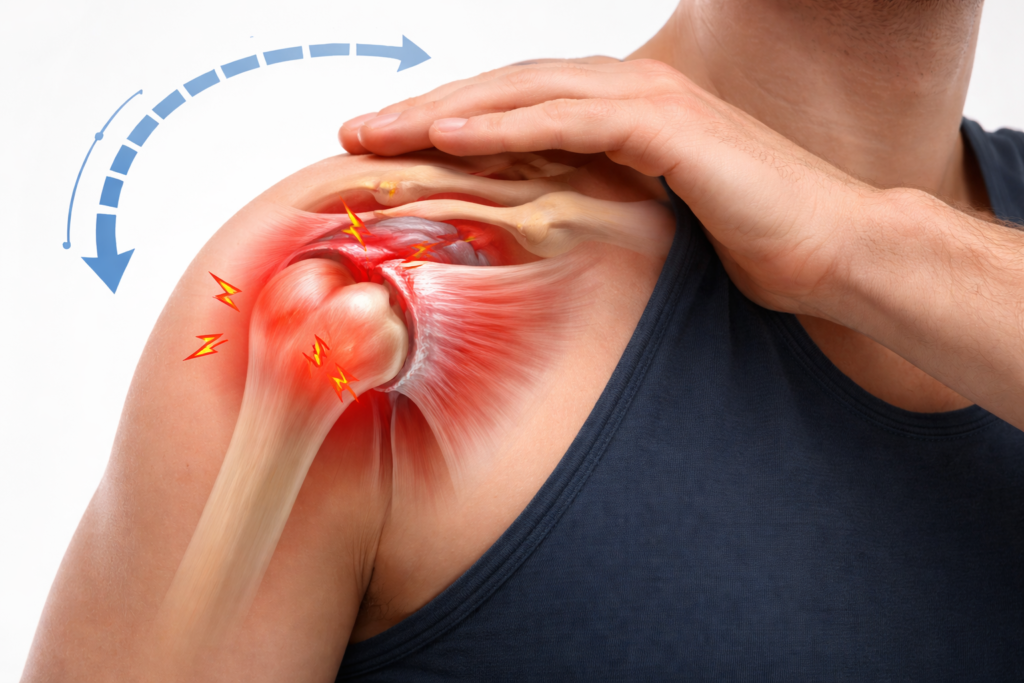
High-volume injections, or hydrodilatation, are used to treat adhesive capsulitis (frozen shoulder) by expanding the tightened joint capsule, improving range of movement and reducing pain.
What is this injection?
This injection can result in rapid improvements in range of movement in frozen shoulder and is used when there is severe restriction.
The injection usually consists of steroid, local anaesthetic and water for injection or normal saline.
Frequently Asked Questions
How it works:
- The injection typically contains steroid, local anaesthetic, and water or saline.
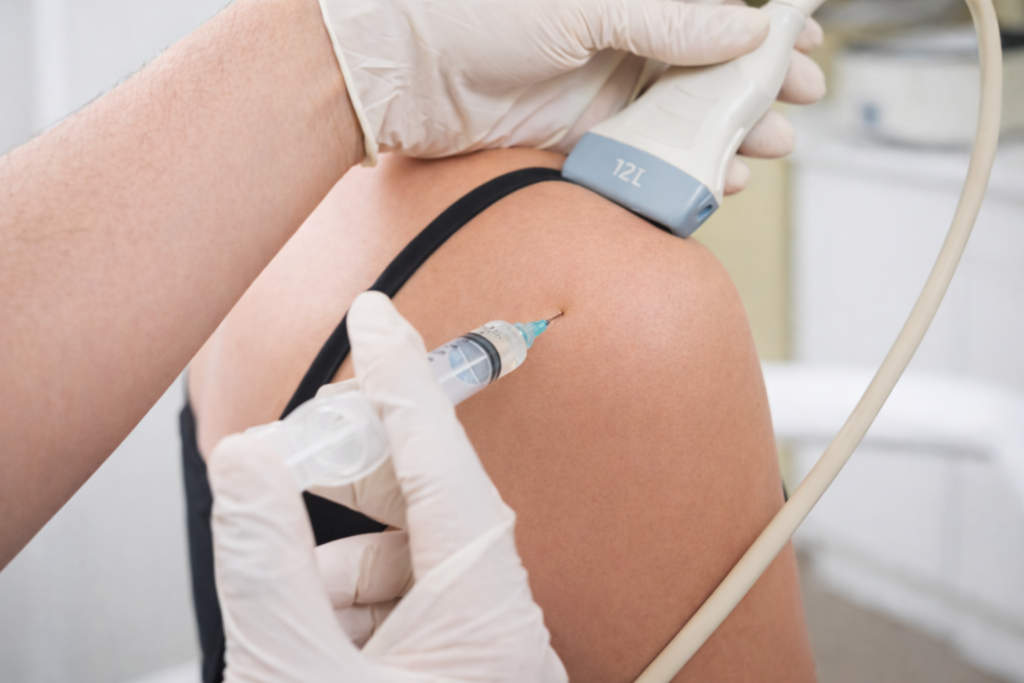
- It is performed under ultrasound guidance to ensure accurate placement and capsule expansion.
- Local anaesthetic is first applied to the soft tissues, followed by the main injection into the shoulder joint.
- The procedure is quick (under 5 minutes) and may cause a temporary “dead arm” sensation.
Results:
- Some patients notice immediate improvement in movement.
- Continued improvement in pain and mobility typically occurs over 4-6 weeks.
Other uses:
- High-volume injections can also treat tendon issues like Achilles and Patellar tendinopathy by separating tendon tissue from underlying structures, reducing pain and aiding rehabilitation.
“Runner’s Trots”: The Real Medical Reason Endurance Athletes Sometimes Lose Bowel Control